When comparing open-air sandblasting to laser cleaning, the differences in PPE requirements and environmental impact are substantial. We talked about these in an earlier blog titled Laser Cleaning vs Sandblasting. In this story, we’re bringing the two cleaning methods into a controlled environment – an enclosed cabinet – to focus purely on performance, precision, and workflow efficiency.
From Mechanical Abrasion to Light-Based Precision
Sandblasting is a kinetic process that utilizes sacrificial abrasive grit. To get it right, you have to balance several factors: grit shape and size, hardness, air pressure, and nozzle type. These choices dictate everything from the surface profile to the final cost. Because the process relies on micro-impacts that physically beat the surface, you analyze cleaning power against substrate sensitivity to prevent damage. It is a high-wear method that requires constant refills and monitoring of the abrasive media levels.
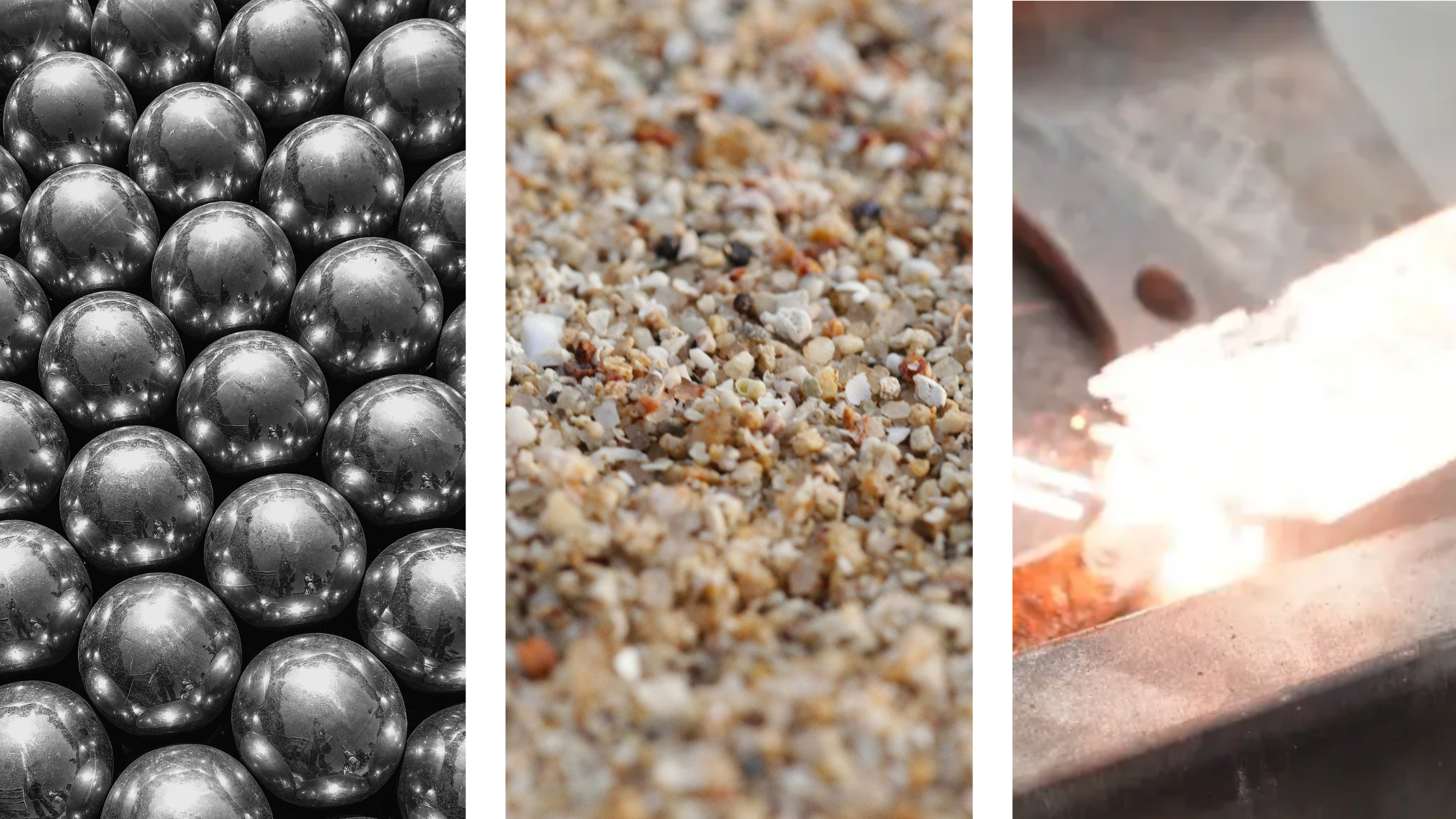
By contrast, laser cleaning involves no contact. The medium is a single laser source emitting a high-intensity beam of infrared light. Here, mechanical force is replaced with selective ablation. When the beam hits the surface, the contaminant layer absorbs the energy so rapidly that it turns into gas or ejects as dust, while the underlying substrate – which has a different ablation threshold – remains intact.
This transition simplifies the logistical chain significantly. Instead of managing a multi-variable mechanical process, the technician adjusts parameters such as pulse frequency, scan speed, and power density, fine-tuning the process to remove a thin layer of oxide or a heavy coat of marine paint with the same tool. It ultimately marks a shift from multi-variable mechanical abrasion to a precise, light-based technology that eliminates media costs, reduces PPE requirements, and delivers a highly repeatable result.
Inside the Cabinet
Our CleanTech Blaster Cabinet (CTCF-4020) was modeled to repeat the familiar sandblasting cabinet setup. However, new users of laser cleaning technology will find the process differs in ergonomics and workflow.
Laser cleaning machine operators must be prepared to maneuver a 5- to 6-pound laser gun inside the cabinet. Because laser cleaning relies on a precise focal distance to achieve the correct power density, maintaining a consistent gap – 8 or 12 inches, depending on the lens – is critical. Operating the gun with a firm, two-handed grip ensures optimal stability, preventing focal drift and guaranteeing an even, uniform finish across the workpiece.
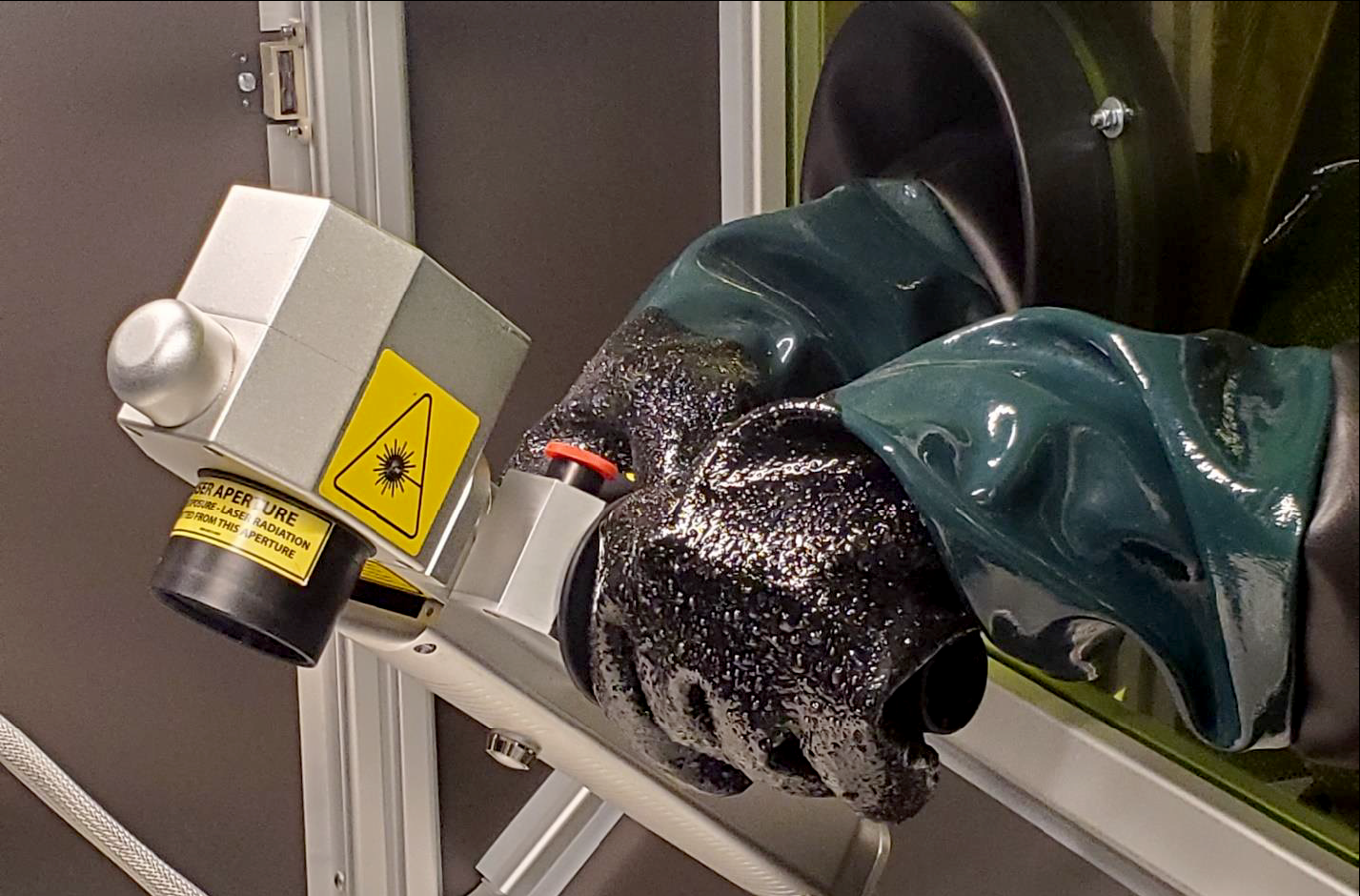
The haze of airborne particulates during laser ablation differs drastically from the sandblaster’s blinding storm of fracturing grit and pulverized debris. However, though the operator’s visibility remains clear for longer, integrating a dedicated dust and fume extraction system in a laser cabinet will help save its sensitive optics and avoid beam degradation or component damage. In addition, much like a sandblaster relies on air pressure for blasting, the laser system uses compressed air to act as an air curtain to deflect particulates away from the laser scanhead’s protective glass.
Post-Processing at Minimum
The contrast in post-job workflow highlights the true efficiency of laser-based technology:
| Operational Factor |
Sandblasting Cabinet |
CleanTech Laser Cabinet (CTCF-4020) |
| Media Management |
Constant monitoring, recycling, and replacing spent, degraded grit |
Zero media. No grit to buy, store, or shovel out |
| Waste Stream |
Heavy secondary waste (contaminated grit mixed with removed debris) |
Minimal airborne dust captured by local extraction |
| Wear & Tear |
High. The internal walls, gloves, and nozzles are systematically destroyed by the blasting media |
Low. The cabinet walls are non-reactive to the laser beam, drastically extending the lifespan of internal components |
Access & Safety Features
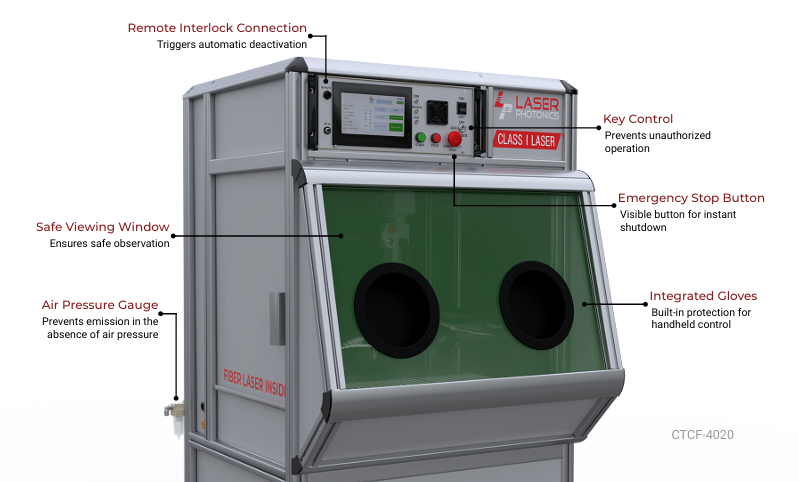
If operated improperly, handheld laser processing may pose serious optical and thermal hazards. An enclosed laser blasting cabinet eliminates these risks. The CTCF-4020 is a CDRH Class I laser machine, safe to use without any personal protective equipment or shielding. The system is complete with safety interlocks and key-switch controls to ensure the laser only fires when the radiation cannot escape from the enclosed workspace.
View Product Brochure
Familiar Level of Control, but Cleaner
Switching from a sandblasting cabinet to the CTCF-4020 means keeping the enclosure setup you already know, but changing the physics of the process. By replacing aggressive mechanical force with light-based precision, you shift from reactive containment to proactive control. Adopting a laser cabinet takes messy blast media logistics out of the picture – eliminating dust-heavy consumables, high component wear, and the burden of secondary waste disposal.
Ultimately, while a traditional cabinet remains a constant battle to contain a destructive kinetic storm, the laser cabinet functions as a controlled, surgical environment. It delivers the same familiar level of shop-floor control, but in a fundamentally cleaner, precise, push-button operation.
Ready to try it out? Talk to us to find out how.
Speak to a Laser Specialist